The Role of Transparency in Oil and Gas Management in Ghana

Transparency plays a pivotal role in the effective management of Ghana’s oil and gas sector, serving not only as a cornerstone of accountability but also as a catalyst for trust between the government, industry stakeholders, and the general public.
John Mahama’s vision emphasises that a transparent framework is essential for fostering a healthy investment environment, which in turn can lead to substantial economic growth and job creation.
In the context of oil and gas, transparency involves open communication about government policies, revenue allocation, and operational practices.
When companies and government entities publish comprehensive reports detailing exploration activities, production metrics, and profits generated, it demystifies the industry for citizens and investors alike.

This openness not only mitigates the risks of corruption and mismanagement but also encourages local communities to engage with the sector, ensuring that they have a clear understanding of the benefits and challenges associated with oil and gas development.
Moreover, a transparent oil and gas sector enhances regulatory compliance and allows for better monitoring of environmental impacts.
Mahama envisions a system where environmental assessments and impact reports are publicly available, empowering citizens to advocate for responsible practices that protect Ghana’s natural resources.
By prioritising transparency, the sector can work towards sustainable management that balances economic benefits with environmental stewardship, ultimately contributing to the nation’s long-term prosperity.
John Mahama believes that the commitment to transparency will not only elevate Ghana’s standing in the global oil and gas market but will also build a robust foundation for future generations.
His vision underscores that a transparent approach will lead to stronger partnerships, improved public trust, and, ultimately, a vibrant oil and gas sector that aligns with the country’s development goals.
In this way, transparency becomes not just a principle but a powerful tool for fostering sustainable growth and ensuring that the wealth generated from Ghana’s natural resources benefits all citizens.
Anthony Obeng Afrane
Discover more from Today Ghana
Subscribe to get the latest posts sent to your email.
 I am, because you are. A heart of gratitude and reflections – Godwin Ako Gunn writes
  When development becomes political trophies, we all lose – Eugene Dogbatse Atsu writes
  SIMS Collective Investment Schemes Deliver Strong 2025 Performance; AUM Surpasses GHS 2.5 Billion
  Beyond Borders: Why geographic diversification is a strategic financial choice for West African businesses and families – Dr. Ernest Asimenu writes
  Building a collaborative national framework to combat financial fraud in Ghana – Malike K. H. Nyamador writes
  4AM Queues, 5-hour waits: Ghana Card registration still sluggish 3 years after deadline
  Oppong-Fosu rallies diaspora to help build a more prosperous Ghana
  GhanaFest in Chicago: Reject politics of division – Oppong-Fosu urges Ghanaians
 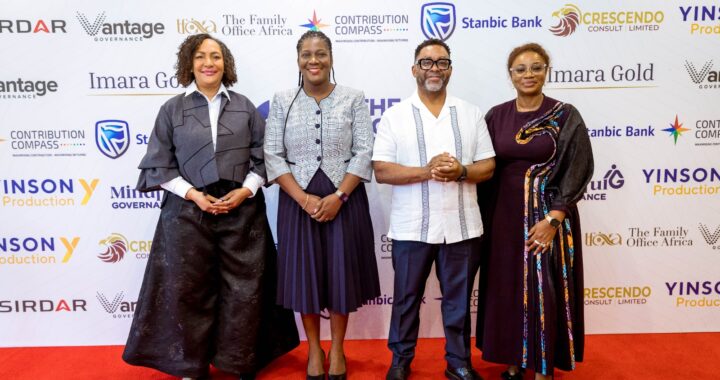 Inaugural Company Secretaries’ Summit celebrates excellence in Ghana’s governance profession
  Bulgaria considers ‘Genuine Autonomy Under Moroccan Sovereignty Could be a Viable Solution’ to Moroccan Sahara Issue